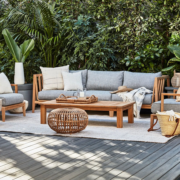
Compact outdoor seating arranged on a small patio with potted plants

A Few Tips for Choosing Outdoor Furniture for a Small Patio

Finding the right outdoor furniture for a small patio can be tricky. You want the space to feel comfortable and useful, but you also do not want it to feel crowded the moment someone pulls out a chair or puts a tray down.

The good news is that a small patio can still work beautifully with the right pieces. It comes down to choosing furniture that suits the space you have, the way you actually use it, and the amount of care you are willing to give it through the year.

In the following article, we will cover a few practical tips for choosing outdoor furniture for a smaller patio or balcony.

1. Measure The Space Before You Shop

Before falling in love with a table, couch, or patio set, take a few minutes to measure the area properly. This sounds simple, but it is one of the most useful steps you can take before buying anything.

Leave enough room to walk around the furniture comfortably. A patio that looks spacious when the furniture is pushed neatly into place can feel very different once people are sitting down, moving chairs, or carrying food outside.

It also helps to think about how the doors open, where the sun hits during the day, and whether you need access to plants, taps, storage boxes, or a braai area. The right furniture should make the patio easier to use, not harder.

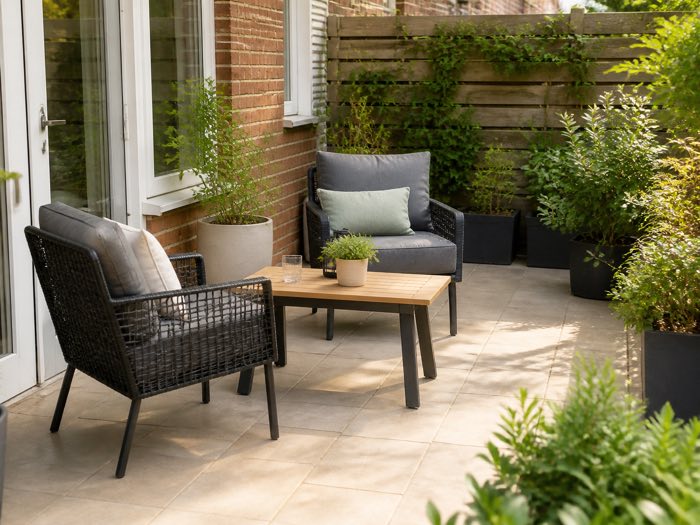
Compact outdoor seating arranged on a small patio with potted plants

2. Choose Pieces That Do More Than One Job

When space is limited, every piece of furniture should earn its place. A small bench with storage inside can hold cushions when the weather changes. A side table can work as a drinks table, a plant stand, or an extra serving spot when guests come over.

Folding chairs are also useful because they can be brought out when needed and packed away when the patio is quiet. Stackable chairs can do the same job without taking over a corner of the house or garage.

This does not mean your patio should feel temporary or bare. It simply means choosing pieces that are easy to live with every day.

3. Pick Materials That Suit Your Weather

Outdoor furniture has to deal with more than regular use. Sunlight, rain, dust, wind, and moisture all have an effect over time. That is why the material matters just as much as the style.

Metal frames can be strong and neat, especially on smaller patios where bulky furniture can make the space feel heavy. Wicker and woven styles can soften the look, but they should be easy to wipe down and made for outdoor use. Wooden pieces can look beautiful, but they may need more regular care to keep them in good condition.

Cushions are worth checking carefully too. Look for fabric that can handle outdoor use and covers that can be cleaned without too much fuss. If the cushions are difficult to remove, clean, or store, they may become a problem later.
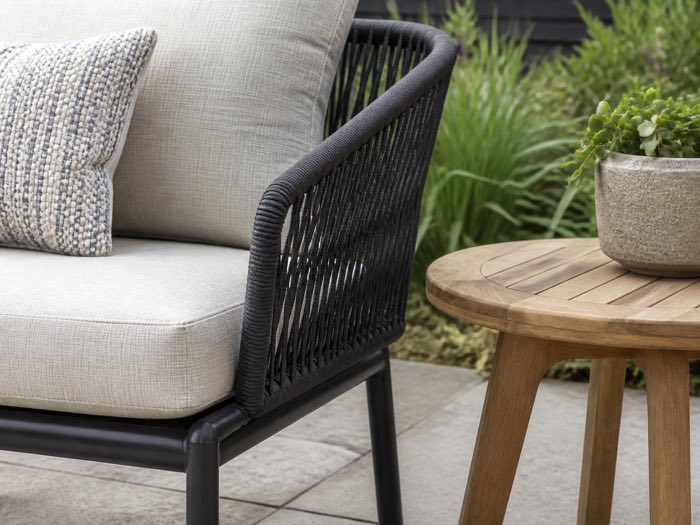
Close view of weather-resistant outdoor chair materials and cushion fabric

4. Keep The Layout Simple

A small patio usually works best when the layout is not too busy. One comfortable seating area is often better than trying to fit in a dining set, lounge chairs, storage, and decoration all at once.

If you mainly use the patio for morning coffee, a small table and two comfortable chairs may be enough. If you like having friends over, choose seating that can be moved around easily. If the patio is more of a quiet reading spot, comfort may matter more than the number of seats.

Try to keep the centre of the patio as open as possible. This makes the whole area feel larger and gives people enough room to move naturally.

5. Think About Storage From The Start

Even strong outdoor furniture lasts longer when it is protected. Cushions, throws, covers, and smaller accessories should have somewhere dry to go when they are not being used.

If you do not have a garage or shed nearby, look for furniture that makes storage easier. A slim outdoor storage bench, folding chairs, or a table that can be moved against the wall can all make a small space more practical.

This is especially helpful during wet weather or during seasons when the patio is not used as often. Good storage keeps the area tidy and helps protect the furniture from unnecessary wear.
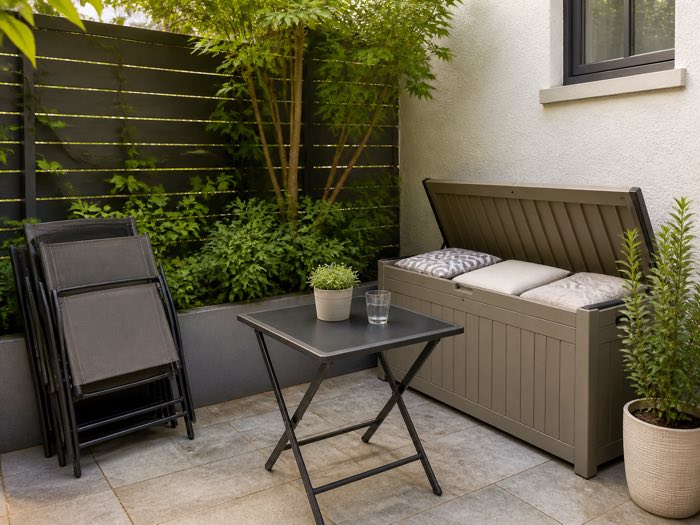
Foldable patio chairs and outdoor storage bench in a compact outdoor space

6. Do Not Forget Comfort

It is easy to focus on size and forget that outdoor furniture still needs to be pleasant to sit on. A chair may fit perfectly into a tight corner, but if it is uncomfortable, it will not get much use.

Test the height, seat depth, and cushion support if you can. Make sure the table is the right height for drinks, snacks, or meals. Small patios can still feel generous when the furniture is comfortable and well placed.

With the right choices, even a modest outdoor area can become one of the most enjoyable parts of the home. Keep the layout simple, choose materials that suit the weather, and make sure every piece has a clear purpose.
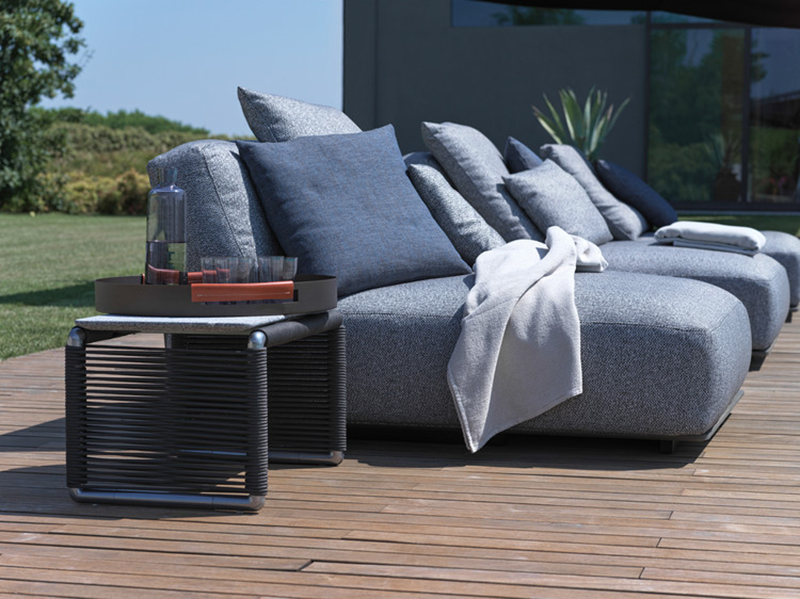
How To Take Care of your Upholstery So That it Lasts Forever

It is such a great feeling when you finally find that piece of furniture that completes the home’s design and generally makes your life better. After carefully planning your design and balancing the elements of your room perfectly, that piece of furniture is the crowning achievement and there will never be another one quite like it.

Now it is time to sit back and relax in your handiwork. It takes time and effort to get the right furniture in your home so it makes sense to preserve the aesthetics and structural integrity of your upholstered products. The key to making your upholstery look and feel great for as long as possible is to take proper care.

As experts on everything related to keeping your upholstery clean and in tip-top conditions, we have compiled a few important aspects of well-maintained furniture.

1. Dust and Vacuum Weekly

The greatest danger to your furniture is the dust, dirt, smoke, and grease particles that come wafting through the home and light on your beautiful upholstery. Dust and dirt are made of all kinds of particulate matter that can become lodged in the soft fabrics of your upholstery and begin to damage these fine materials.

The longer that these contaminants are allowed to remain lodged in your upholstery the greater the damage they will deal. As the fabrics are worn down, they become more susceptible to staining and discoloration.

Reduce this damage by keeping your upholstery dust free. Vacuum regularly, but at the very least once every week. If your fabric begins to pill, as it will with time, use a fabric razor to carefully remove unwanted fuzz from your furniture.

2. Avoid Direct Sunlight

Exposure to the sun’s powerful solar radiation can have a very bad effect on your upholstery. UVA/UVB radiation can cause colors to fade and transform while deteriorating the materials themselves. Protect your upholstery from sunlight by placing furniture away from windows and skylights.

3. Rotate Cushions

The cushions on your couches should be flipped and rotated at least once a week.

This is especially important for those couches that accommodate couch potatoes. The longer one sits on the couch, the greater their chances of misshaping the furniture. But, remember to never remove the cushion covers, except for regular cleanings.

4. No Pets Allowed

We all love our animal friends, so this one factor can be a point of contention. Most furniture is not designed to handle the pet hair and dander that will quickly deteriorate your upholstery. So, if you want to keep your furniture in good shape forever, you will need to keep Pogo on the floor. Or compensate for the extra strain with more gentle and frequent cleanings.

5. Professional Cleaning

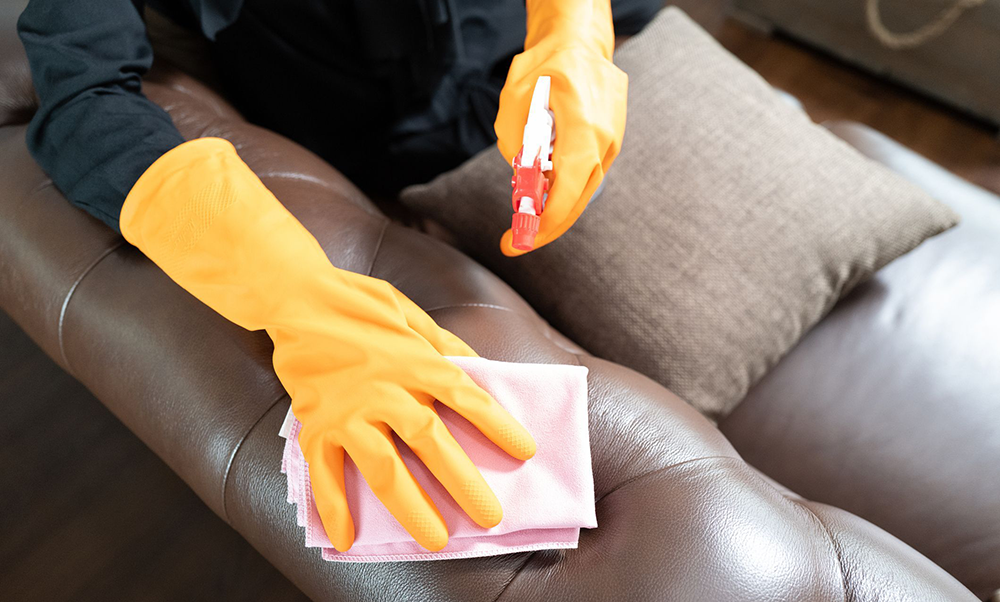
Every so often you can supplement your regular cleanings with comprehensive professional cleaning. A professional cleaning will reach deep into the fabrics of the upholstery and the paddings below and pull all vestiges of grease, dust, dirt, mites, pet dander, and anything else found within. This will leave your upholstery looking feeling and performing as new.

Tips on How To Protect Your Outdoor Furniture 

The backyard or patio is the place to be in the summer and fall and your patio furniture will be getting plenty of action during this time. But with all the enjoyment, be sure you are providing your patio furniture with the right care to ensure they last many summers more.

The good news is that caring for your patio furniture is really not that difficult. In the following article, we will cover 5 steps that can greatly enhance the longevity of your patio furniture.

1. Protect Your Furniture From The Sun & Rain.

Of course, outdoor furniture is supposed to withstand the attrition of the elements, but all that exposure will begin to take its toll. If your furniture is not being used, it needs to be protected from the sunlight, rain, and wind.

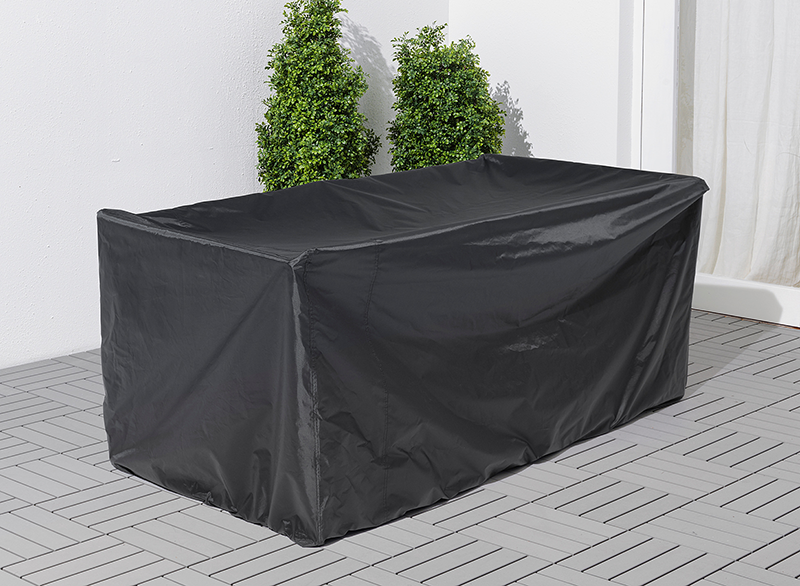
This can be covering them with weather-resistant materials or placing them under a protected area of your backyard or patio.

2. Keep your stuff clean

You will preserve the integrity of your patio furniture if you can provide them with a quick wash a week. Patio furniture is sure to collect pollen, dust, mold spores, and other contaminants that can begin to affect the aesthetics and beauty of your furniture.

But there is no need for pressure washing or harsh chemicals, just pick up the twigs and leaves, and hose off the furniture with an average garden hose.

3. Use material-safe cleaning products for deeper cleans

When it comes to preserving the longevity of your patio furniture, you will find that different materials have different cleaning methods. Fabrics can be machine washed and dried in the sun. Wicker furniture can be brushed down with bleach and water to kill molds and mildews and then rinsed down with a garden hose.  Wooden furniture can be washed down with a solution of detergent and water and then wiped clean with dry rags.

Metal furniture can be scrubbed with soap and water and then treated with a thin coat of car wax for extra protection — buff that up to shiny perfection.

4. Store cushions when you aren’t using them

Even the sturdiest fabrics will be damaged by the effects of solar exposure, pollen, dust, molds, and mildews. This is why they must be stored somewhere cool and dry when they are not in use. Proper storage will protect your cushions from premature retirement.

Take the time to invest in outdoor storage boxes if you have outdoor space. You can also consider placing these cushions inside when they are not in use.

5. Cover or store your furniture during the off-season

When the summer is over and the outdoor areas will not be in use, your outdoor furniture still needs to be protected from extreme temperatures and precipitation. The cold and wet winter can reduce the longevity of your outdoor furniture.

The best place for storing your outdoor furniture is in a shed or garage, where your items can stay safe from the cold and wind and be ready to use again when spring rolls around.